Can You Weld Cast Iron? An Honest Answer
Yes. Almost always yes. The better question is whether you should, and that changes part by part — because with cast iron, the welding isn't the hard bit. The cooling is.
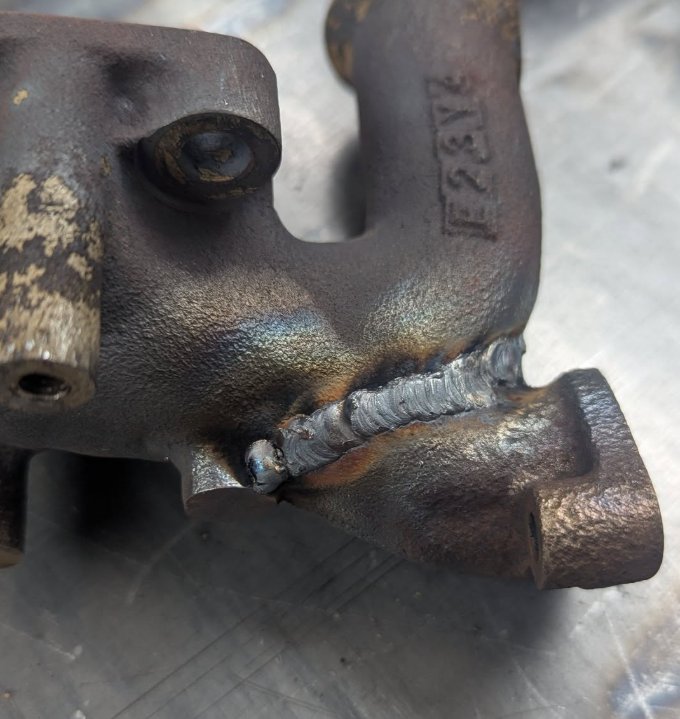
Somebody's holding half a bench vise, or a wood stove door with a crack running through it, and the question is always the same. Can this be welded?
I'll say this up front: cast iron is the fussiest common repair there is. It's not hard because the welding is hard. It's hard because the metal fights you while it cools, and cooling is the part nobody thinks about.
Cast iron isn't just "hard steel"
Steel bends before it breaks. You can see it happen. Overload a steel bracket and it'll sag and complain first.
Cast iron doesn't do that. Gray cast iron runs somewhere around 2 to 4 percent carbon, where mild steel is usually 0.15 to 0.25 percent — roughly ten times as much. That carbon sits in the metal as flakes of graphite, and those flakes are why cast iron machines nicely, soaks up vibration and pours into complicated shapes like a stove or an engine block.
What they don't do is stretch. Cast iron is brittle. Push it and it snaps instead of bending.
Here's why that matters. When you melt a spot on a part, that spot swells from the heat and shrinks as it cools. On steel, the metal around it stretches a little and absorbs the pull. Cast iron can't stretch. So the shrinking force has to go somewhere, and it goes into a new crack, usually a few inches from the one you just fixed.
The weld isn't what fails. The cooling is.
The heat cycle is the actual job
Anybody can lay a bead. Controlling the temperature of the part before, during and after is what separates a repair that holds from a part in two more pieces.
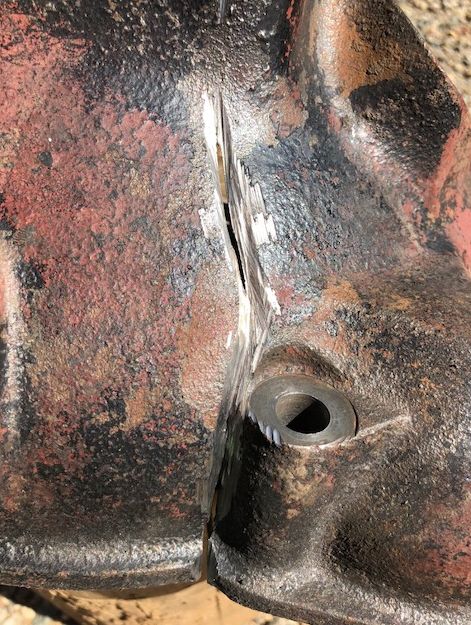
Preheat. Warming the whole part first, slowly and evenly, shrinks the gap between the hot weld zone and the cold metal around it. Less difference, less stress. Lincoln Electric puts typical preheat at 500–1200°F, and says preheat and interpass temperature shouldn't drop below 350°F during welding. What you don't do is go near the critical range, around 1450°F, where the metal starts changing in ways you don't want.
Keeping heat in while you work. You don't preheat and then let it drift down while you take your time. The part stays in its range the whole way through, and the beads stay short — around an inch at a time, at low current, so you're not dumping heat and stress into one spot.
Slow cooling. This is the step people skip, and it's the one that decides everything. After welding, the part comes back to room temperature slowly. Hours, not minutes. Wrapped in an insulating blanket, buried in dry sand or lime, or left in a shut-off oven to coast down.
Set it on a cold concrete floor in February and you'll hear it crack. I'm not exaggerating.
The three main approaches
Nickel-based rods. The usual filler for cast iron repair. Nickel weld metal stays soft and ductile, so it stretches a little as things cool and absorbs stress the casting can't. Lincoln's high-nickel electrode for cast iron deposits welds that can still be machined afterward, which matters when a surface has to seal or bolt up flat. It's also expensive, which is part of why cast iron repair costs what it does.
Brazing. Different logic entirely. Brazing doesn't melt the cast iron at all. The American Welding Society defines it as joining with a filler that melts above 840°F but below the melting point of the base metal — so the filler flows and bonds to the surface while the casting itself stays solid. Less heat in means less shrinking stress, which means less cracking. The trade is strength and heat tolerance. For thin, decorative or fragile parts, brazing is often the smarter call.
Stitch welding and peening. Not a filler, a technique. Run a short bead, stop, and peen it while it's hot to spread the weld metal and relieve shrinking stress. Then move somewhere else on the crack and run another short one, letting the first cool. Slow and deliberate, and a big part of why cast iron takes longer than people expect.
Is your part worth fixing?
Cast iron repair is mostly labor. Preheating a wood stove and cooling it overnight is most of a day, even though the welding takes minutes. So the honest question isn't "can it be fixed," it's whether fixing it is the best use of your money.
| If your part is… | Then usually… |
|---|---|
| Obsolete, antique, or you can't buy another | Repair — this is where it's worth it |
| Cheap and still sold at any supply house | Replace. Buy the new one. |
| Big and heavy (stove, machine base, press frame) | Repair — replacement costs more than the day of work |
| Small, decorative, low stress | Braze, or epoxy is honestly fine |
| Holding pressure (coolant, water jacket, hydraulics) | Get it assessed first. Pressure is unforgiving. |
| Structural, lifting or towing | Assessed first, and often replaced in steel instead |
| Already cracked twice in the same spot | Stop. Something else is wrong. |
That last one is real. A part that keeps cracking in the same place is telling you the casting is fatigued, it's being loaded wrong, or it's mounted in a bind. More welding won't fix any of those.
What people actually bring me
Exhaust manifolds. The classic. They heat and cool constantly and they warp, so even a good weld gets stressed hard every day. Repairable, but the mating surface usually needs to come back flat afterward or it'll just leak somewhere else.
Wood stoves. Usually worth fixing, especially older ones you can't replace. Big, heavy, expensive to buy new, and the repair is mostly patient heat management.
Machine bases and press frames. Good candidates. Heavy, often obsolete, and the load is mostly compression.
Bench vises. Depends on the vise. An old American-made vise is worth real effort. A twenty-dollar import is not, and the jaw that broke will break again.
Antique and tractor parts. The best case for repair, because there's no replacement to buy. Nobody's making that part anymore, so the repair is the only option there is.
Engine blocks, housings and heads. Get eyes on it first. Sometimes it's a straightforward external crack. Sometimes it runs into a water jacket or a bearing bore and the part is scrap no matter who welds it. That call gets made with the part in front of you, not over the phone.
"Can't I just JB Weld it?"
Sometimes, actually, yes. Cast iron is one of the places epoxy holds up better than people expect, because a lot of cast iron parts sit still and carry compression rather than flexing.
Where it genuinely works: a hairline seep in a non-pressure casting, a cosmetic chip, a stove trim piece, a crack in something that doesn't get hot and doesn't carry load.
Where it doesn't: anything that gets hot, which rules out most exhaust and stove work, and anything holding pressure or weight. The full breakdown with the manufacturer's own strength and temperature numbers is in JB Weld vs. a Real Weld Repair.
One thing worth knowing before you reach for the tube: if the part ever does need welding, that epoxy has to be ground completely out of the crack first. A quick fix now can make the real repair messier later.
What not to do
- Don't weld it cold in the driveway and call it done. No preheat, no controlled cooling, and you've built a crack instead of fixing one.
- Never quench it. Not water, not compressed air, not "just setting it outside to cool faster." Fast cooling is the most reliable way to ruin a cast iron repair.
- Don't keep welding a part that keeps cracking. Three attempts on the same crack isn't persistence, it's a diagnosis you're ignoring.
- Don't guess on anything safety-critical. Lifting, towing, holding weight over a person, or containing pressure.
- Don't grind the crack out before somebody's seen it. A lot of the useful information is in how the crack looks and where it ends.
Questions I actually get asked
Can you weld cast iron with a regular stick welder?
Usually, yes — the machine is rarely the limitation. It's commonly done with a stick welder and a nickel-based rod. What you can't skip is the heat management: preheat, short controlled beads, slow cooling. Someone with a welder and no plan for the cooling ends up with a part in more pieces than it started in.
Do you have to preheat?
Most of the time, yes, in the range above. There are deliberate low-heat techniques for small repairs on certain parts, where keeping the casting cool and working very slowly is the strategy rather than a shortcut. That's a judgment call based on the part in front of you.
What's the difference between welding and brazing cast iron?
Welding melts the cast iron and fuses new metal into it. Brazing melts only the filler, which bonds to the surface at a much lower temperature. Welding is stronger and handles heat better. Brazing puts far less stress into the part, so it's less likely to crack it. Thin, decorative or fragile parts often braze better than they weld.
Can a cracked engine block be saved?
Sometimes. It depends on where the crack is, how far it runs, and what it runs into. A crack on an outer wall is a very different thing from one running into a cylinder or a bearing bore. Anyone who tells you yes or no from a photo alone is guessing.
How do I know if it's cast iron and not steel?
Cast iron usually has a rough, slightly pebbly surface from the casting sand, and often a faint seam line where the mold halves met. Shapes are thick and curvy rather than cut and welded from flat pieces. A file skates on it more than it bites. And if it's already broken, look at the fracture: cast iron breaks with a dull grey grainy face, steel tears and stretches.
If it's cast iron and it matters, get eyes on it first
Cast iron rewards patience and punishes shortcuts. Some of these parts are absolutely worth saving, especially the old ones you can't buy anymore. Some of them are telling you to walk away, and there's no shame in hearing that.
Send a photo before you grind it
Include the whole part, not just the crack, and mention how it broke. That's usually enough for a straight answer on whether it's worth fixing. SES Field Services brings mobile welding and repair to you across CT, NY, MA and RI, with our own power on board.
Sources
- Lincoln Electric — Guidelines for Welding Cast Iron (preheat range, interpass minimum, critical temperature, short beads, slow cooling)
- Lincoln Electric — Choosing Stick Electrodes for Welding Cast Iron
- Lincoln Electric Tech-Rod 99 (high-nickel electrode, machinable deposits)
- AWS Brazing Handbook (brazing defined as filler melting above 840°F, below the base metal)
- Introduction to cast iron (carbon content of cast iron vs. steel)
Figures are the published values from the sources above and can change; always follow the procedure for the filler metal you're actually using. Nothing here replaces having a cracked part looked at.